Designing a pharmaceutical manufacturing facility is far more complex than constructing a conventional industrial building. From regulatory compliance and process optimization to future scalability and contamination control, every decision directly impacts product quality, operational efficiency, and long-term profitability.
A well-planned layout of the pharmaceutical industry not only ensures smooth workflows but also helps pharmaceutical companies meet stringent global standards such as GMP, WHO, USFDA, and EU guidelines. Whether you are planning a pharmaceutical API plant, a formulation unit, or an integrated manufacturing setup, strategic pharmaceutical plant planning is critical.
This guide explores the core principles, best practices, and expert insights into pharmaceutical manufacturing facility design, while also highlighting how experienced PDVD consultants and a trusted pharmaceutical consultant in India can help organizations achieve compliant, efficient, and future-ready facilities.
Understanding Pharmaceutical Manufacturing Facility Design
Pharmaceutical manufacturing facility design refers to the systematic planning and structuring of physical spaces, utilities, equipment, and workflows to ensure safe, compliant, and efficient drug production.
Unlike other industries, pharmaceutical plants must address:
- Product contamination risks
- Controlled material and personnel flow
- Regulatory inspections and audits
- Validation and documentation requirements
A well-designed pharmaceutical industry layout supports consistent product quality while reducing operational risks and costs.
Key Objectives of Pharmaceutical Plant Planning
Effective pharmaceutical plant planning focuses on the following objectives:
1. Regulatory Compliance from Day One
Facilities must comply with:
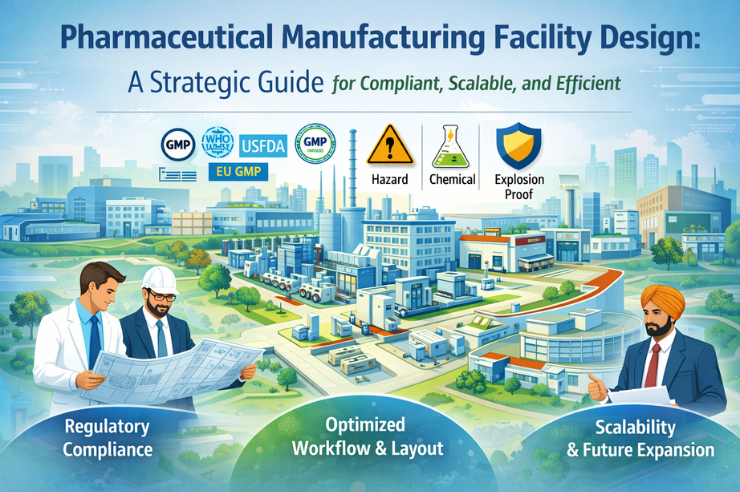
- GMP (Good Manufacturing Practices)
- WHO, USFDA, EU-GMP standards
- Local regulatory authority requirements
Designing the facility with compliance in mind reduces costly redesigns during audits.
2. Optimized Workflow and Layout
An efficient layout of pharmaceutical industry operations ensures:
- Logical movement of raw materials, intermediates, and finished products
- Segregation of clean and non-clean areas
- Minimal cross-contamination risks
3. Scalability and Future Expansion
Smart facility design anticipates:
- Increased production capacity
- New dosage forms or APIs
- Technology upgrades
This future-ready approach saves capital expenditure over time.
Designing the Facility: Core Components
1. Site Selection and Zoning
The first step in designing the facility is selecting a site that meets:
- Environmental norms
- Utility availability (water, power, effluent treatment)
- Logistics and supply chain needs
Zoning ensures clear separation between:
- Manufacturing areas
- Warehousing
- Quality control labs
- Utilities and services
2. Pharmaceutical Industry Layout Planning
A compliant pharmaceutical industry layout must clearly define:
- Material Flow: Raw materials → processing → packaging → dispatch
- Personnel Flow: Separate entry/exit points with gowning and de-gowning
- Waste Flow: Controlled disposal to avoid contamination
Proper zoning improves audit readiness and daily operational efficiency.
3. Pharmaceutical API Plant Design Considerations
A pharmaceutical API plant requires additional design controls due to:
- Hazardous solvents
- Chemical reactions
- High-risk operations
Key considerations include:
- Explosion-proof areas
- Dedicated HVAC systems
- Solvent recovery units
- Proper effluent and waste management
Expert PDVD consultants often play a vital role in aligning API plant design with global safety and compliance norms.
Role of PDVD Consultants in Facility Design
PDVD (Process Design, Validation, and Documentation) consultants are essential partners in pharmaceutical facility development.
Their expertise includes:
- Process flow design aligned with GMP
- Equipment selection and placement
- Validation planning (DQ, IQ, OQ, PQ)
- Regulatory documentation support
Engaging experienced PDVD consultants ensures that the facility design is not only operationally efficient but also inspection-ready from the first audit.
Why Work with a Pharmaceutical Consultant in India?
India is a global hub for pharmaceutical manufacturing, making it home to some of the most experienced pharmaceutical consultants.
A reliable pharmaceutical consultant in India offers:
- In-depth knowledge of global and Indian regulatory frameworks
- Cost-effective design solutions
- Experience across API, formulation, and biotech facilities
- End-to-end project support—from concept to commissioning
For companies targeting international markets, Indian consultants provide strategic insights that align local operations with global expectations.
Utilities and Support Systems: The Backbone of Compliance
A pharmaceutical plant is only as strong as its utility systems. Critical utilities include:
- HVAC systems for temperature and contamination control
- Water systems (PW, WFI)
- Compressed air and clean steam
- Electrical and backup power systems
Proper integration of utilities during pharmaceutical plant planning prevents compliance gaps and production downtime.
Quality Control and Laboratory Design
Quality control laboratories must be:
- Physically separated from production areas
- Designed for safe sample handling
- Equipped with controlled environments
Strategic lab placement within the pharmaceutical industry layout improves testing efficiency and regulatory compliance.
Conclusion: Designing for Compliance, Efficiency, and Growth
Pharmaceutical manufacturing facility design is a strategic investment, not just a construction project. A well-planned pharmaceutical industry layout, guided by experienced PDVD consultants and a trusted pharmaceutical consultant in India, ensures long-term compliance, operational efficiency, and scalability.
Whether you are developing a pharmaceutical API plant or expanding an existing manufacturing unit, expert-led pharmaceutical plant planning is the foundation of sustainable success in today’s highly regulated pharmaceutical landscape.
Final Recommendation
For best results, engage professionals early in the planning stage. Thoughtfully designing of the facility today prevents regulatory hurdles, operational inefficiencies, and costly redesigns tomorrow.
Pharmaceutical manufacturing facility design is the process of planning and organizing production areas, utilities, equipment, and workflows to ensure safe, efficient, and compliant drug manufacturing. It focuses on meeting regulatory standards while supporting smooth operations and long-term scalability.
Pharmaceutical plant planning ensures that the facility meets GMP, WHO, USFDA, and EU-GMP requirements from the start. Proper planning reduces the risk of regulatory non-compliance, avoids costly redesigns during audits, and helps maintain consistent product quality.
A well-designed pharmaceutical industry layout improves material and personnel flow, separates clean and non-clean areas, and minimizes cross-contamination risks. This results in smoother workflows, faster production cycles, and improved audit readiness.
Pharmaceutical API plant design must address safety and compliance challenges such as handling hazardous solvents, managing chemical reactions, and controlling high-risk operations. Important elements include explosion-proof areas, dedicated HVAC systems, solvent recovery units, and effective waste management.
PDVD consultants help with process design, validation planning, and regulatory documentation, ensuring the facility is inspection-ready. A pharmaceutical consultant in India provides cost-effective design solutions, regulatory expertise, and end-to-end project support aligned with global compliance standards.