Pharmaceutical production does not just run on steel and stainless steel anymore. It runs on code. The catch is simple: if the software is not reliable, neither is the medicine.
That is where Computer System Validation (CSV) steps in. CSV in pharma is the discipline that proves methodically, defensibly, and repeatedly that every computerized system does exactly what it is supposed to do, nothing more, nothing less. It is the difference between “it seems to work” and “it is proven to work under audit conditions.”
For pharma facilities, that difference can mean passing inspection or shutting a line down entirely.
Key Aspects of CSV in Pharma
Computer system validation in pharma is not just an IT checkbox. It is a regulatory, operational, and patient-safety commitment rolled into one. Think of it as an engineering discipline applied to software.
Regulations and Standards
Pharmaceutical companies operate under intense scrutiny from regulators like the U.S. Food and Drug Administration, the European Medicines Agency, and global GMP frameworks. These bodies expect documented proof that computerized systems:
- Protect product quality
- Maintain data accuracy
- Prevent unauthorized changes
- Provide traceable audit trails
If a batch record system glitches or deletes data, it is not “just a bug.” It is a compliance risk.
CSV exists to remove that uncertainty before regulators find it for you.
The V-Model (SDLC)
The V-Model is a fundamental component of most CSV programs. It is a structured Software Development Life Cycle where planning and testing mirror each other. On the left side, you define what the system should do. On the right side, you prove it actually does it.
The V-Model provides a clear and structured framework with no room for shortcuts. There are no shortcuts and no room for “we will fix it later,” because in pharma, delays are expensive.
Risk-Based Approach
Not every system carries the same risk.
A temperature monitoring platform controlling vaccine storage carries a high risk. A cafeteria booking app, on the other hand, carries significantly lower risk.
Modern CSV uses a risk-based approach. High-impact systems get deeper testing and tighter controls. Lower-risk systems get proportionate effort. This approach saves time, reduces documentation overload, and keeps teams focused where failures truly matter: on patient safety and product integrity.
Documentation
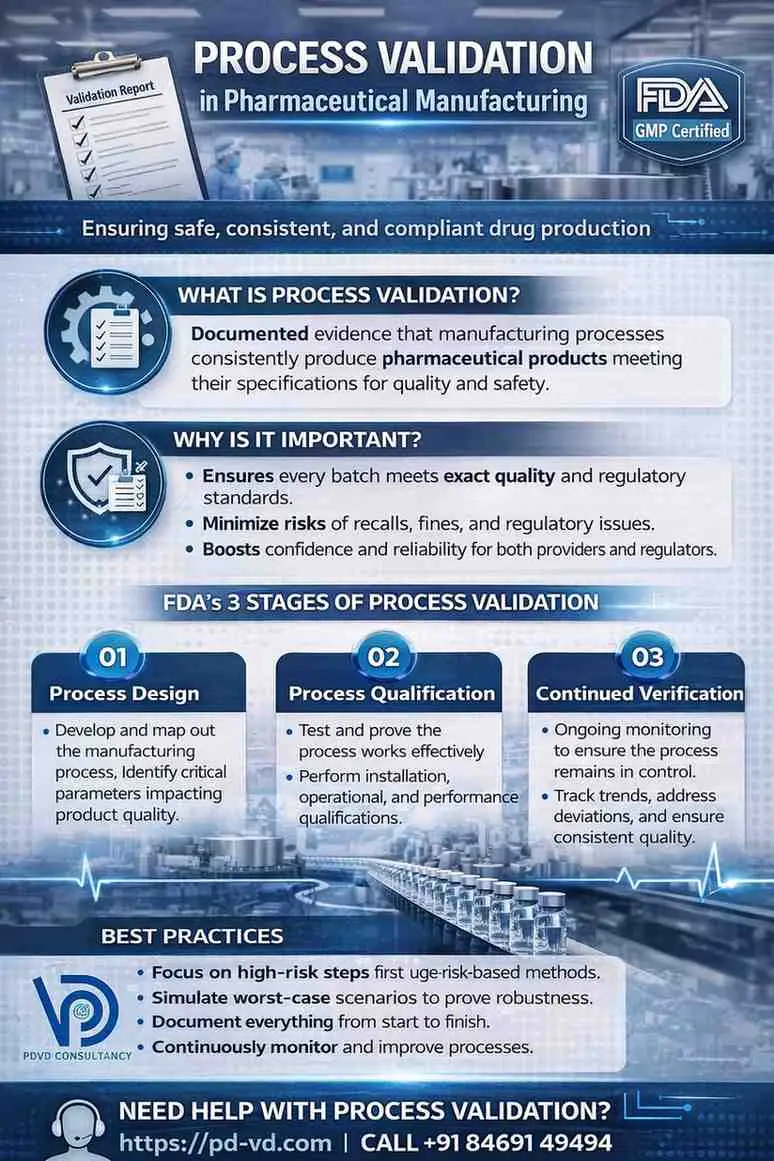
If it is not documented, it did not happen. That sentence might sound harsh, but it is the golden rule of validation. Every step, from requirements to testing, must be recorded clearly. Inspectors do not trust memory. They trust evidence.
Documentation creates traceability from Requirement to Specification, then to Test, and finally to Result. It is a straight, visible line with no mysterious gaps.
Data Integrity
Data is the lifeblood of pharmaceutical manufacturing. PDVD Consultants understand this deeply. This includes batch histories, calibration logs, stability data, and electronic signatures. Lose that, and you lose proof that your product is safe.
CSV in pharma ensures systems follow ALCOA+ principles: Attributable, Legible, Contemporaneous, Original, and Accurate, plus Complete, Consistent, and Secure.
When data integrity is strong, audits feel calm instead of chaotic.
Common CSV Life Cycle Stages
Validation is not one big event. It is a structured journey with checkpoints along the way, and it requires careful planning.
Planning
Planning defines:
- Scope
- Risk level
- Validation strategy
- Responsibilities
- Timelines
A Validation Plan becomes the playbook. Without it, teams wander. With it, everyone moves with purpose. Good planning saves weeks, while poor planning multiplies headaches and delays.
Requirements (URS)
The User Requirement Specification (URS) is where business needs are translated into system expectations. It uses simple language with no technical jargon.
For example: “The system shall generate batch reports automatically.”
It defines what the system must do, not how it does it.
Clear requirements prevent most future disputes, because you cannot test what was never defined.
Specifications (FS/DS)
Now the technical layer steps in.
- Functional Specification (FS): what the system will do
- Design Specification (DS): how it will do it
This is where IT architecture, workflows, and configurations are detailed. Think of it like blueprints before construction. You would not pour concrete without drawings. The same logic applies here.
Qualification (IQ/OQ/PQ)
This is the heart of CSV — the proof phase.
Installation Qualification (IQ) confirms the system is installed correctly.
Operational Qualification (OQ) Tests that functions work as intended.
Performance Qualification (PQ) Proves the system performs reliably in real-world use.
It is progressive confidence-building. Layer by layer, risk drops. By the end, you do not hope it works; you know it works.
Reporting and Maintenance
Validation does not end at go-live.
Systems change, updates happen, and users evolve over time.
That means:
- Periodic reviews
- Change control
- Revalidation when needed
- Ongoing monitoring
CSV is a lifecycle, not a one-time certificate. Treating it as “set and forget” is how compliance drifts and audits get painful.
Why Facility Providers Matter
For pharma manufacturers, managing CSV internally can stretch resources thin. Validation demands specialized knowledge, regulatory fluency, and tight execution.
A facility partner experienced in pharmaceutical environments brings the following:
- Pre-built validation frameworks
- Standardized documentation templates
- Faster qualification timelines
- Audit-ready systems
- Fewer surprises
It is not just support; it is meaningful risk reduction. In pharma, reducing risk is everything.
Conclusion
Computer System Validation is not glamorous. It does not get the spotlight like new equipment or breakthrough formulations. Quietly, however, behind the scenes, it keeps everything standing. It protects product quality. It protects patient safety. It protects the company itself. In a world where manufacturing runs on software, validation becomes the invisible foundation holding it all together. Strong CSV means fewer failures, smoother inspections, and systems you can trust on your worst day, not just your best. In pharmaceuticals, “probably works” is never good enough. Proven is the only standard that counts. Need expert CSV support? PD-VD Consultants delivers audit-ready validation solutions built for pharmaceutical compliance. Call us at +91 84691 49494 to learn how we can support your validation journey today.